Mobile app design / Gamification / Inclusivity
SignFlow: enhancing accessibility for sign language users
Overview
A mobile app that tackles the communication barriers faced by people with hearing impairments — especially across the many different sign languages — and makes learning them more fun.
- Role
- UX Designer & Researcher
- Project type
- Academic
- Duration
- 3 months
Background
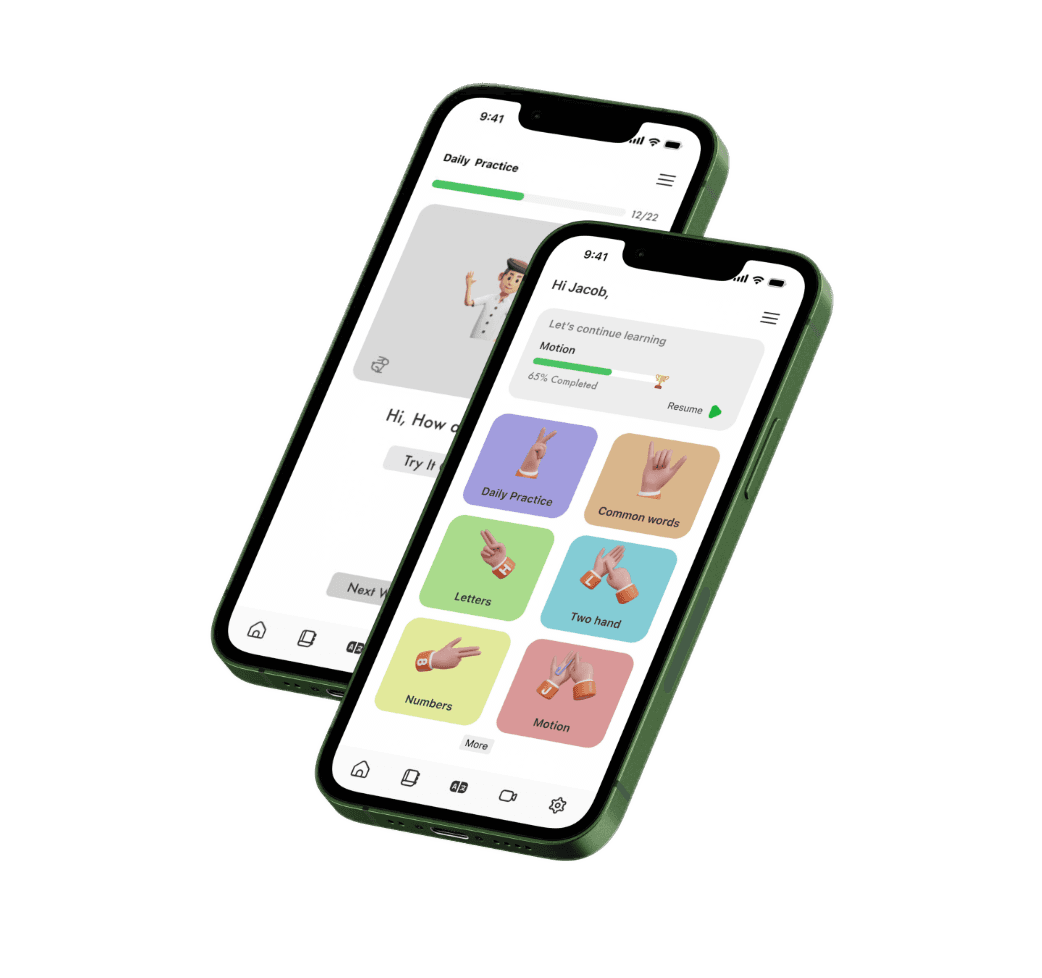
SignFlow is a mobile application designed to make communication more inclusive and usable. Key features include support for multiple sign languages, a real-time sign language translator for live conversations, and gamification to make learning more engaging.
The problem
“Sign language users face communication barriers due to a lack of intuitive, accessible tools tailored to their needs.”
Understanding the problem
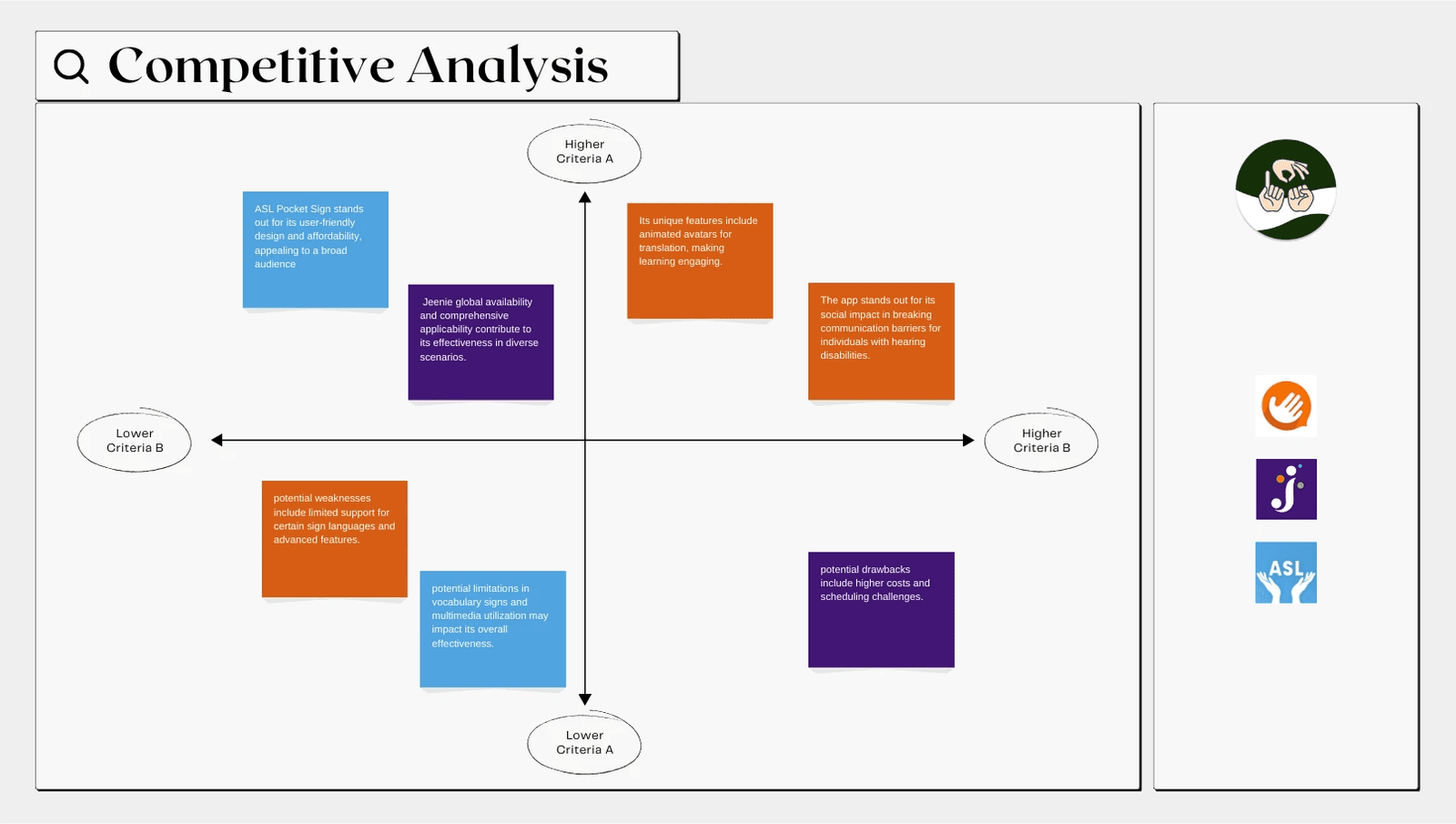
Existing sign language apps have limited vocabulary and inconsistent content. We set out to build a user-friendly app with real-time translation during video calls, a growing vocabulary and interactive, multimedia activities.
Gathering insights
- Real-time communication is crucial: users lack tools that translate seamlessly in everyday settings.
- Intuitive, inclusive design is missing: existing platforms are not built around sign language users.
- Privacy and independence matter: users want to communicate independently and securely.
- Multiple sign languages: strong demand for tools that reflect regional and cultural diversity.
The goal
“An app that bridges communication gaps with real-time translation, intuitive design and seamless accessibility.”
Structuring the experience
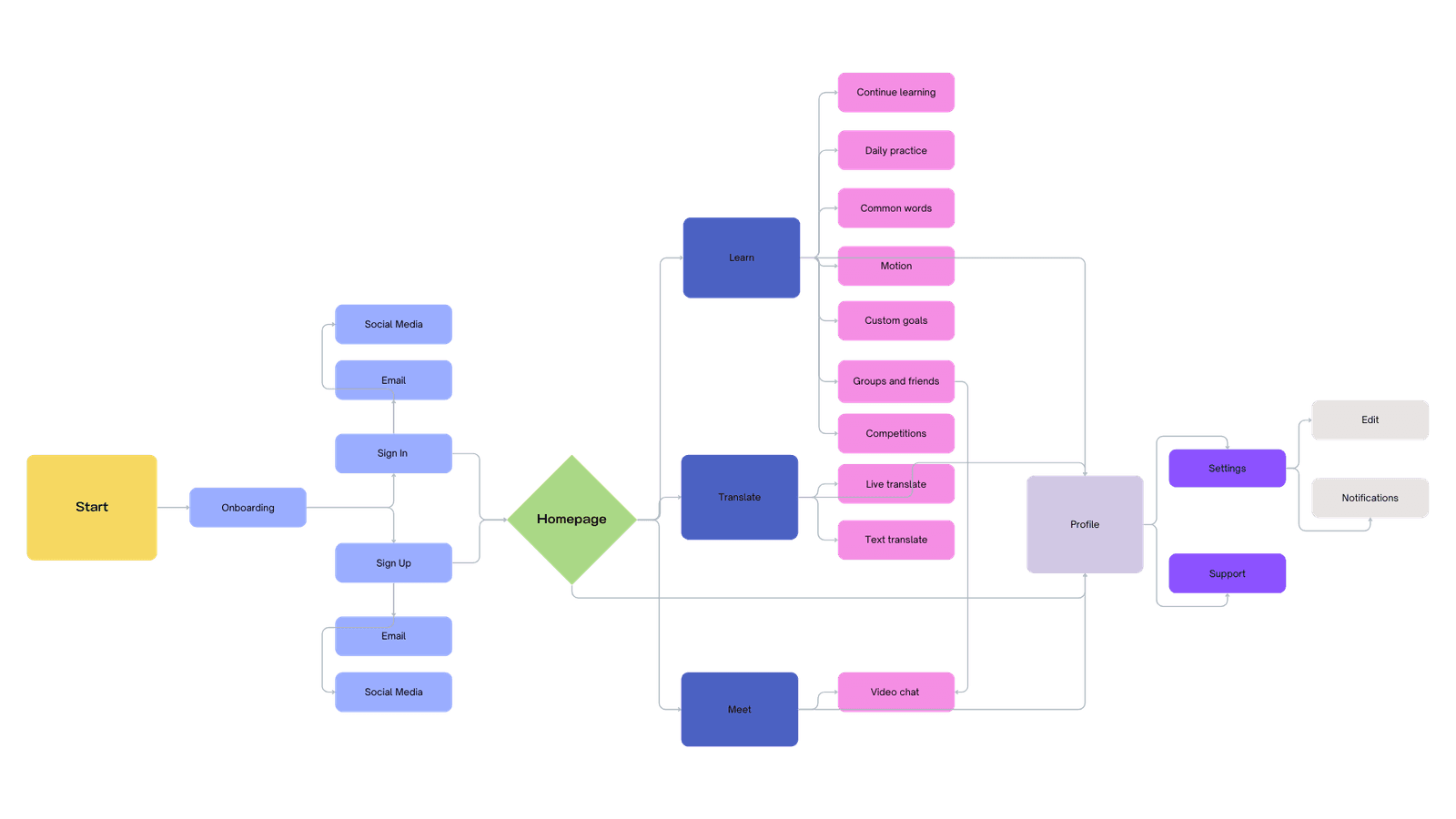
Before sketching, I created a sitemap to decide which features and pages would help users most, grounded in the research.
Wireframing the solution
Visual design
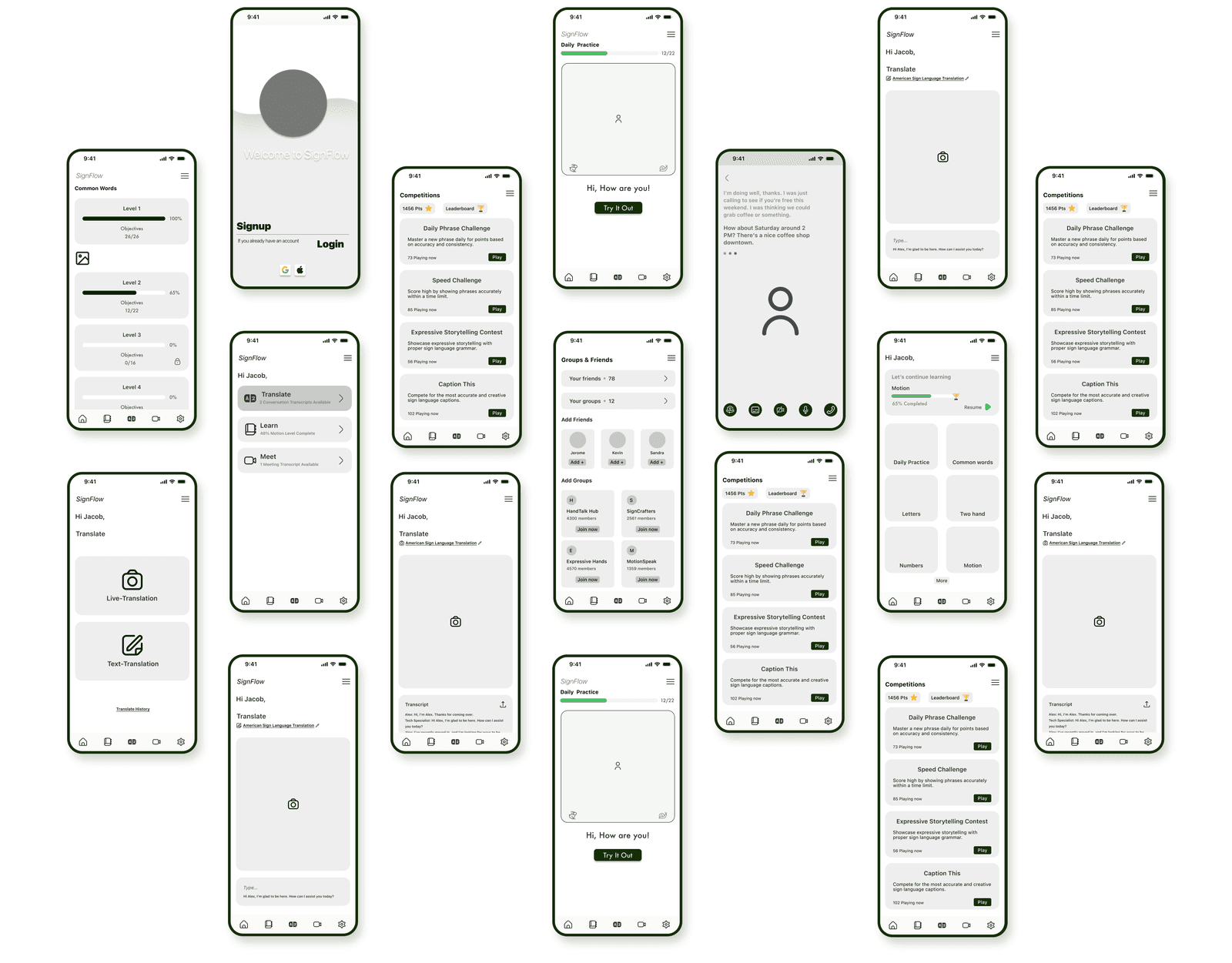
Moving from mid- to high-fidelity, we added precise details, colour and realistic elements — the blueprint for development.
Results and takeaways
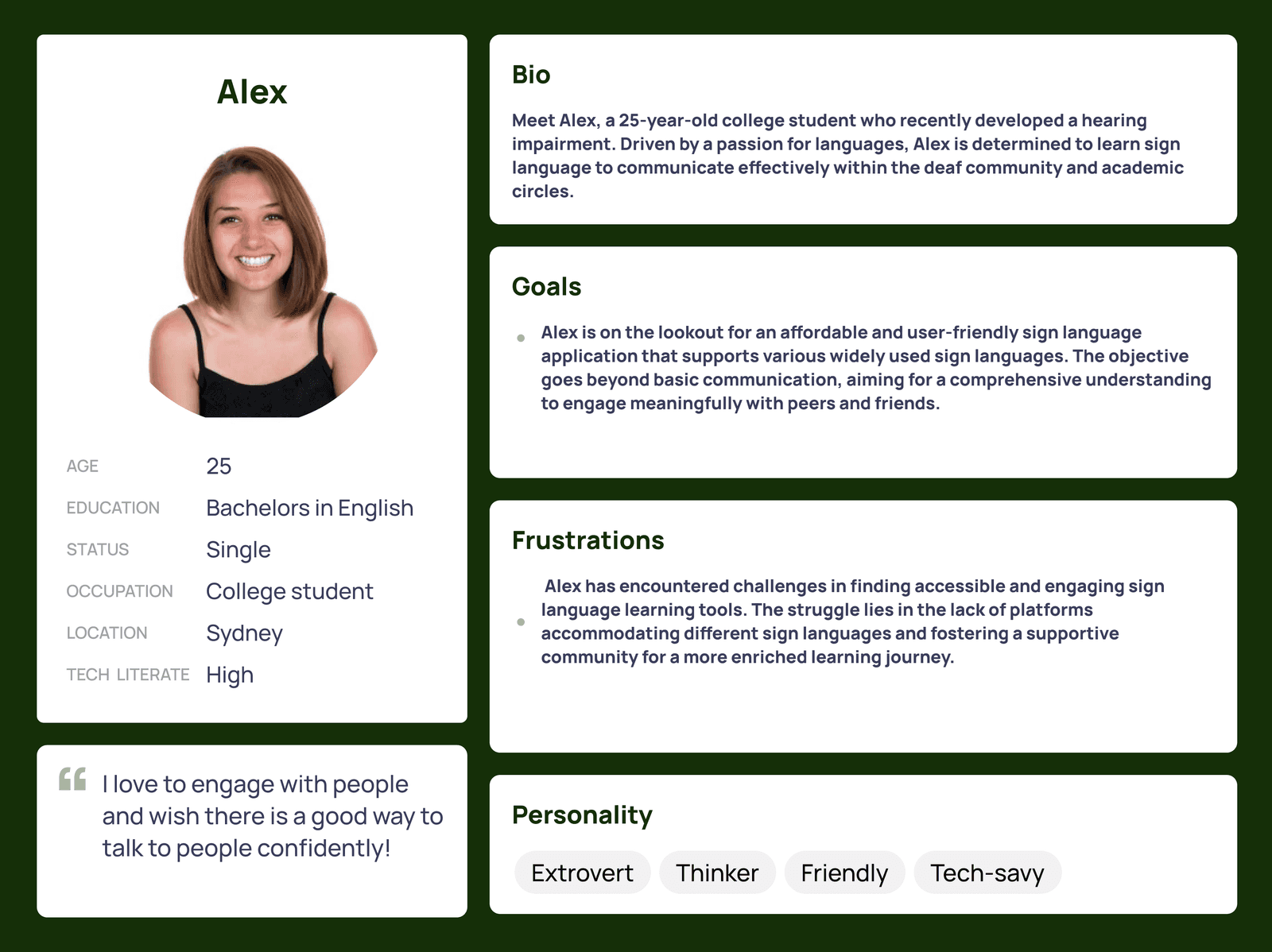
- Understand users deeply: personas like Alex and Jordan kept the design inclusive.
- Iterate with feedback: low- to high-fidelity prototypes turned ideas into usable interfaces.
- Clear structure: a sitemap and flows made navigation logical.
- Engagement matters: gamification and multimedia keep learners motivated.